


January 13, 2026

Credit unions are built on trust. Members trust you with their money, their personal information, and their financial future. Behind the scenes, that trust is protected—or put at risk—by the technology you rely on every day. As credit unions grow, add services, and respond to increasing regulatory and cybersecurity pressure, one thing becomes clear: technology can no longer live in silos.
That’s where unifying your technology comes in.
Unifying your technology means intentionally designing, managing, and supporting all your IT systems so they work together as one cohesive environment. Instead of separate vendors, disconnected tools, and finger-pointing when something breaks, your technology stack operates as a single, aligned system that supports your mission, your staff, and your members.
The Cost of Disconnected Systems
Many credit unions didn’t set out to create fragmented environments. Technology was added over time—new phone systems, upgraded networks, cloud services, cybersecurity tools, and physical security—often from different vendors solving different problems.
The result?
- Multiple support numbers to call
- Gaps in visibility and accountability
- Higher operational costs
- Increased cybersecurity risk
- Slower response during outages or incidents
Your credit union’s full technology ecosystem—from communications and networks to managed services, cloud, and physical security—works best when everything is connected. Here’s how unifying these systems improves service, reliability, and risk management.
Communications: The Front Door to Member Service
Your communications systems—voice, video, messaging, and collaboration—are the front door to your credit union. When communications are unified with your network and security systems, you gain reliability, call quality, and visibility. More importantly, your staff can serve members without interruptions, dropped calls, or confusing workflows.
Unified communications also allow for better disaster recovery, remote work support, and call analytics, ensuring members always reach a live, knowledgeable person when it matters most.
WAN and LAN: The Backbone of Everything
Your Wide Area Network (WAN) connects branches, remote users, and cloud services. Your Local Area Network (LAN) supports daily operations inside each location. When these networks are unified and centrally managed, performance improves and troubleshooting becomes faster and more accurate.
Unified networking allows you to prioritize critical applications, segment traffic for security, and quickly adapt as branches grow or change. It also creates a solid foundation for cybersecurity and cloud integration.
Managed Services: Proactive, Not Reactive
Managed Services should not be a collection of disconnected monitoring tools. When unified properly, managed services give your credit union a single pane of glass into system health, performance, patching, backups, and compliance.
This proactive approach helps prevent outages instead of reacting to them. It also ensures accountability—one partner owns the outcome, not just individual components.
Cybersecurity: Stronger Together
Cybersecurity is most effective when it’s unified across your entire environment. Firewalls, endpoint protection, email security, identity management, and monitoring tools must share intelligence and respond together. Most credit unions don’t struggle with a lack of security tools—they struggle with managing too many of them. Here are nine key cybersecurity solutions that work together to effectively protect members, systems, and operations.
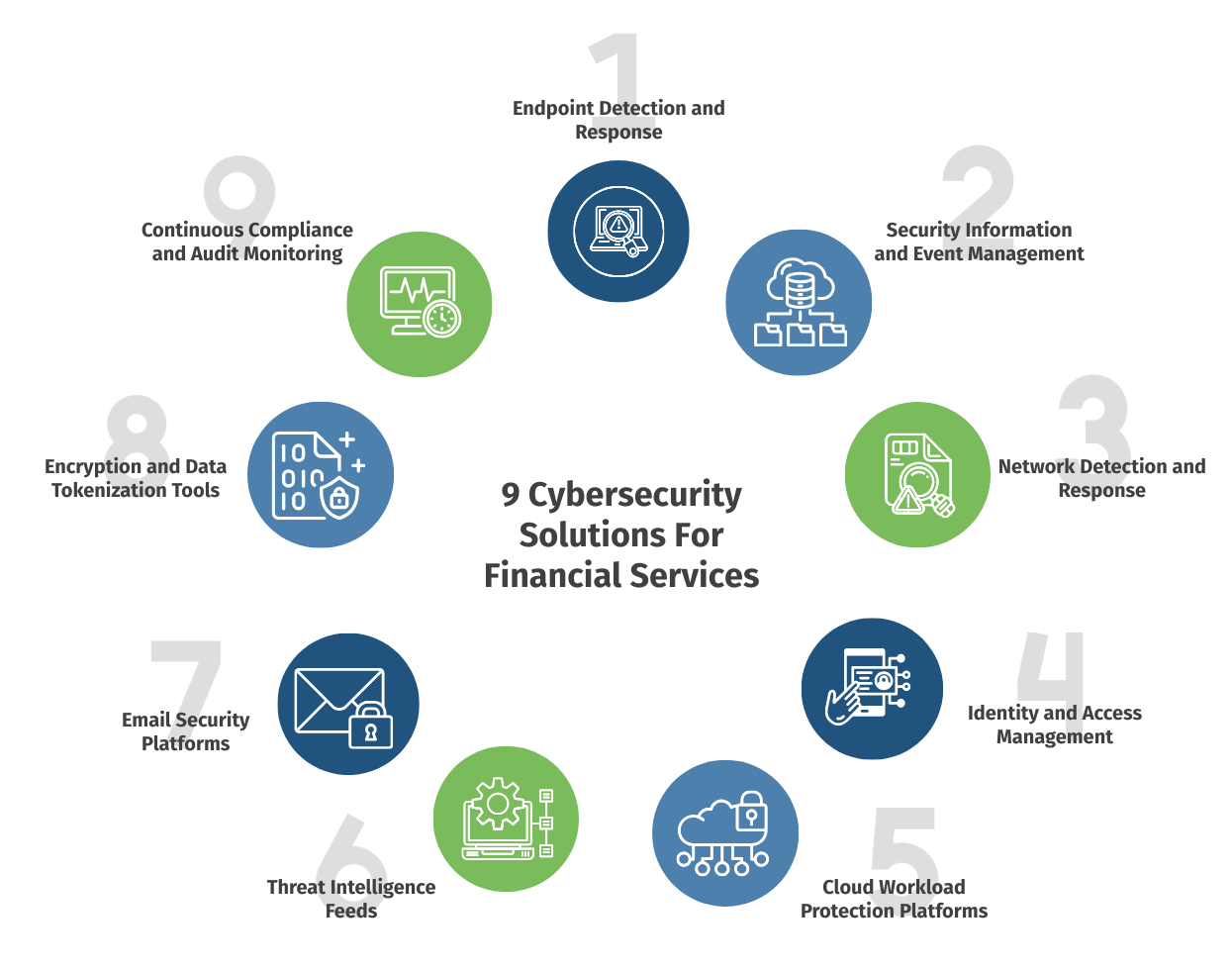
For credit unions, where regulatory compliance and member trust are non-negotiable, unified cybersecurity reduces blind spots and shortens response times. When a threat is detected, your systems already know how to react—automatically and consistently.
Cloud Data Center: Flexibility with Control
Cloud data centers give credit unions scalability, resilience, and cost control—but only when they’re integrated with networking, security, and managed services. A unified approach ensures secure access, predictable performance, and clear governance over where data lives and how it’s protected.
This alignment also simplifies audits, disaster recovery planning, and future technology decisions.
Physical Surveillance Security: Often Overlooked, Always Critical
Physical security systems—cameras, access control, and monitoring—are frequently managed separately from IT. That’s a mistake. When physical surveillance is unified with your network and cybersecurity systems, you gain better visibility into incidents and stronger overall protection.
A single event can be viewed from multiple angles: who accessed a space, what happened on camera, and what was occurring on the network at the same time. That insight is invaluable.
Network Infrastructure: The Glue That Holds It All Together
Switches, firewalls, wireless access points, and cabling form the glue of your technology environment. When infrastructure is standardized and unified, everything built on top of it becomes more reliable, secure, and easier to manage.
Unifying your technology isn’t about buying more tools—it’s about making smarter decisions that align your systems with your mission. For credit unions, that means better member experiences, stronger security, lower risk, and a technology environment that supports growth instead of holding it back.
If your credit union is ready to move away from fragmented systems and toward a unified, resilient technology strategy, now is the time to start the conversation. Contact Corporate Technologies Group at info@ctgusa.net or call 330-655-8144 to learn how unifying your technology can help protect your members, empower your staff, and strengthen your future.
Recent Blog Posts...

Jun. 03, 2026
Is Your Infrastructure Ready for the Next Five Years?

May. 18, 2026
AI and Cybersecurity: Why Detection and Response Need More Than Traditional Tools

May. 04, 2026
How AI Is Changing Managed IT Services: From Reactive Support to Predictive Operations

Apr. 27, 2026
AI Is Already in Your Business. You Just Don’t Control It Yet.

Apr. 12, 2026
Building a Wide Area Network That Keeps Your Business Running—No Matter What
- AI3
- Application Integration5
- Application Performance16
- Artificial Intelligence1
- Asset Management1
- Bandwidth Management7
- Business Continuity / Disaster Recovery41
- BYOD7
- Cloud50
- Collaboration17
- Communication19
- Compliance3
- Contact Center1
- Cyber Liability Insurance1
- Cybersecurity33
- Dark Web1
- Hosted Phone46
- Hybrid Working2
- Internet4
- Internet of Things6
- IT Infrastructure15
- Managed Network Services10
- Managed Services9
- Microsoft Teams2
- Network Performance29
- Network Security32
- News11
- Phishing1
- Press Release2
- Risk Assessment1
- SIP Trunking3
- Technology Audit3
- Telehealth3
- Uncategorized38
- Unified Communications48
- VoIP36
- Work From Home3